Artigo dos voluntários do Serviço Cívico Alemão
“Beauty with a Dark Side”
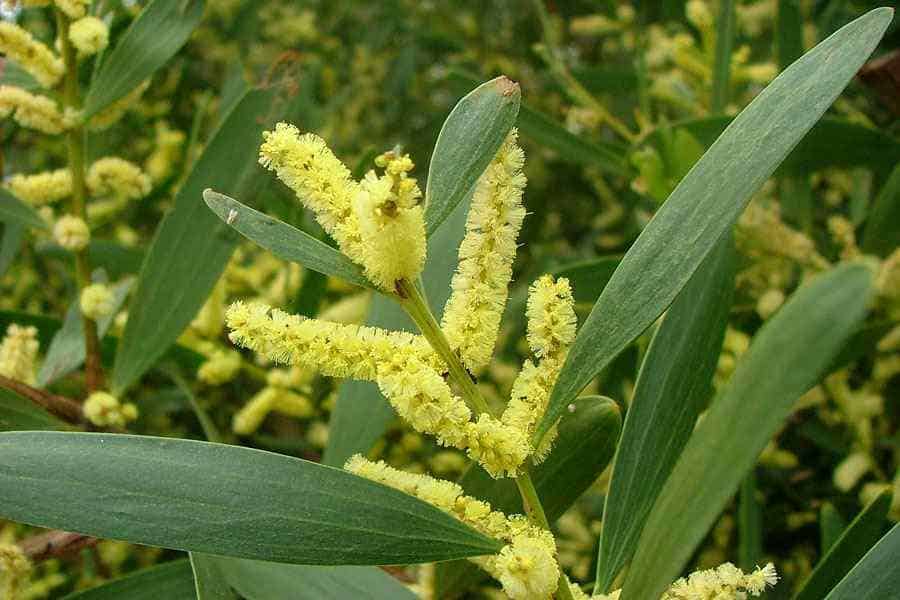
In late winter, the hills of central Portugal turn bright yellow, creating a seemingly beautiful view. The plant responsible for this is Acacia dealbata, better known as the mimosa or silver wattle. With its fluffy, light- yellow flowers and silvery-grey leaves, it easily catches the eye. However, behind this attractive appearance and its smooth grey bark lies an ecological disaster.
Originally introduced from the Australian states of New South Wales, Victoria and Tasmania as an ornamental plant, the mimosa has become one of the most aggressive invasive species in Portugal. Its spread is no longer only an environmental problem: for the local population, the huge amount of pollen it produces is causing increasing allergy problems.
A Risk Shock: When Numbers Sound the Alarm
To objectively assess the danger posed by invasive species, Portugal uses a risk-assessment system based on international standards. In this system, species are already considered high-risk if they reach a score of 13. Acacia dealbata reaches an alarming score of 31.
This extremely high value shows how urgent management measures are. A score that is more than twice the threshold for “high risk” classifies the mimosa as one of the most dangerous threats to Portugal’s land ecosystems.
Chemical Warfare: Sabotage Underground
The success of the mimosa is based on a kind of biological warfare. Through so-called allelopathic effects, it releases chemical substances that actively prevent native plants from germinating and growing. At the same time, its nitrogen-rich leaf litter strongly enriches the soil. This change in soil conditions takes away the living space of many native species and instead supports the further spread of the mimosa.
Especially endangered are important Natura 2000 habitats, including cork oak forests (Quercus suber) and sensitive alder floodplain forests (Alnus glutinosa). The impact is severe: “It forms very dense stands, prevents the development of native vegetation, reduces water runoff in streams and increases erosion problems.”
Phoenix from the Ashes: Why Fire Helps the Mimosa
In a country like Portugal, which is often affected by wildfires, the mimosa has a dangerous advantage. While fire destroys native vegetation, the heat acts as a trigger for mimosa seeds to germinate. These seeds can survive in the soil for many years, forming a huge “seed bank.”
After a fire, this reserve sprouts aggressively. Since the mimosa is often the first species to dominate burned areas, dense monocultures quickly develop. This creates a vicious cycle: open spaces created by fire are immediately taken over by the invasive acacia, making the natural regeneration of native forests almost impossible.
The Dead End of Control: When Cutting Encourages Growth
Fighting Acacia dealbata is a never-ending task. Studies from the Coimbra district (2018–2021) show the limits of common control methods. The results of “slash and burn” experiments are disappointing:
Cutting only (slash): Cutting the trees stimulates strong regrowth from stumps and roots.
Fire (burn): Experimental fires remove surface material but at the same time encourage the germination.
The dead end: Even combined methods fail without long-term follow-up. In the Coimbra experiments, a minimum density of 6.5 shoots per square meter remained even after intensive treatment.
Effective management therefore requires specialized physical and chemical methods, such as ring-barking (removing the bark and vascular tissue at the base of the trunk) or targeted herbicide injections. Most importantly, control is useless without several years of consistent monitoring and the manual removal of young plants.
A Global 400-Billion-Dollar Problem
The situation in Portugal is part of a global crisis. According to the World Biodiversity Council (IPBES), invasive species are a key factor in 60% of documented cases of global species extinction. The economic damage is enormous: invasive species cause global costs of more than 400 billion US dollars every year – an amount comparable to the GDP of countries like Thailand. The mimosa is therefore not just a local visual issue, but an important player in a worldwide biodiversity crisis.
Conclusion: Looking to the Future
The mimosa is a warning example of how well-intended introductions of foreign species can permanently disturb ecological balance. The Montreal Agreement aims to reduce the spread of invasive species worldwide by at least half by 2030. To achieve this goal in Portugal, a change in thinking is necessary. Considering the serious risks and high costs of control, we must ask ourselves: are we willing to fundamentally change our landscape design and plant choices to protect our native cork oak and floodplain forests? The yellow beauty of winter must no longer distract us from the slow loss of our natural identity.”
Autoria: Nikolas Seidensticker