Artigo dos voluntários do Corpo Europeu de Solidariedade
Este mês partilhamos um artigo da autoria de um voluntário do projeto Corpo Europeu de Solidariedade – Volunteer Escapes. Os conteúdos partilhados resultaram do seu projeto de pesquisa de campo e bibliográfica, com o objetivo de fazer comunicação de ciência e divulgação dos trabalhos realizados aquando do seu voluntariado na Associação.
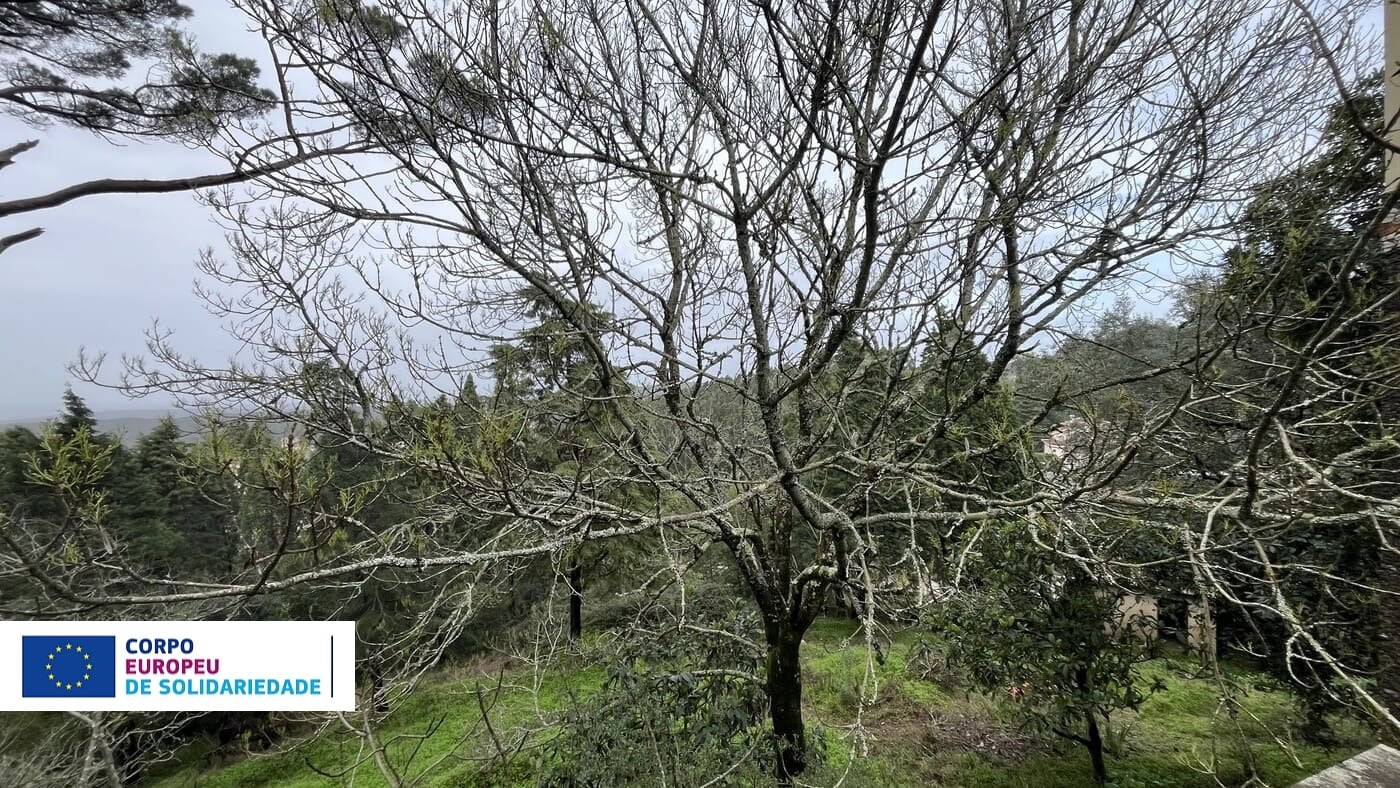
“Did you know how trees can stay alive during winter in very cold temperatures, with little sunshine, and when the soil is too hard to drink water?
Every year, when winter arrives, trees must face big problems: freezing cold, less sun, and frozen ground where they cannot get water. Even with these tough conditions, they manage to survive year after year. Their secret is not to do nothing, but to use natural, smart methods that keep them alive until spring comes back.
When autumn starts, many trees lose their leaf’s (this is called “shedding”). This is not a sign of weakness, but a clever way to save energy. Leaves lose water and always need resources. By letting them fall, the tree protects itself from frost damage and needs much less energy during the coldest months. This is their way to save energy.
Inside the tree, everything slows down. Growth stops, and the tree’s internal life enters a quiet rest state, like sleeping, which is called dormancy. This low activity helps the tree keep as much energy as possible. Even though it looks quiet from the outside, the tree is still alive and working very slowly, saving its power for spring.
To fight the cold, trees also make their own natural “antifreeze.” Special sugars and proteins move around inside their cells. These stop the water from freezing and making sharp ice that can break the cells. This natural chemical protection is the main reason trees do not freeze solid.
The bark is also very important. It acts like a thick winter coat, keeping the inside layers safe from wind, snow, and extreme temperatures. It helps keep the most fragile parts of the tree protected until the weather gets warmer.
Finally, trees that stay green, like pines and spruces (evergreens), use a different method: they keep their needles all winter. These needles are built to survive the cold: they have a waxy layer on them and are designed to lose very little water. This lets them handle cold weather without getting hurt. In the end, trees survive winter because they adapt and protect themselves, not because they are just inactive.”
Autoria: Pierre Boivin