Artigo dos voluntários do Serviço Cívico Italiano
“The term Shinrin-Yoku, which in Japanese means “forest bathing,” originated in the 1980s as a practice for health prevention and promotion. Its goal is simple yet profound: to immerse oneself mindfully in nature, activating the senses to restore balance between mind and body.
Numerous scientific studies have shown that spending time in natural environments reduces cortisol levels, regulates heart rate, and promotes the release of serotonin and dopamine, hormones associated with well-being. At the same time, visual, olfactory, and auditory stimuli typical of natural settings improve attention, memory, and mood.
This is not magic, but biology: human beings evolved over millions of years in close connection with nature, and our senses still carry its imprint. However, modern life, spent mostly indoors, under artificial light, and surrounded by constant digital stimulation, has distanced us from this original dimension.
In this article, I will guide you on a journey through the senses to understand how nature acts on our body and mind. A journey that comes alive among the sounds, scents, and colors of the Mata do Bussaco, one of Portugal’s most enchanting forests and the first certified Healing Forest in the Iberian Peninsula. Not all forests can be certified as therapy forests, for there are several criteria to be fulfilled, namely: the forest must be the most nature possible with few noise; it must have good air quality, as well as visual protection against wind and walking trails with several difficulty and effort degrees. The therapy forest must also offer regular activities with well-trained forest therapists and relaxing treatments. Lace up your boots and prepare your senses—let’s begin!
Sight – A Mosaic of Colors That Regenerates the Mind
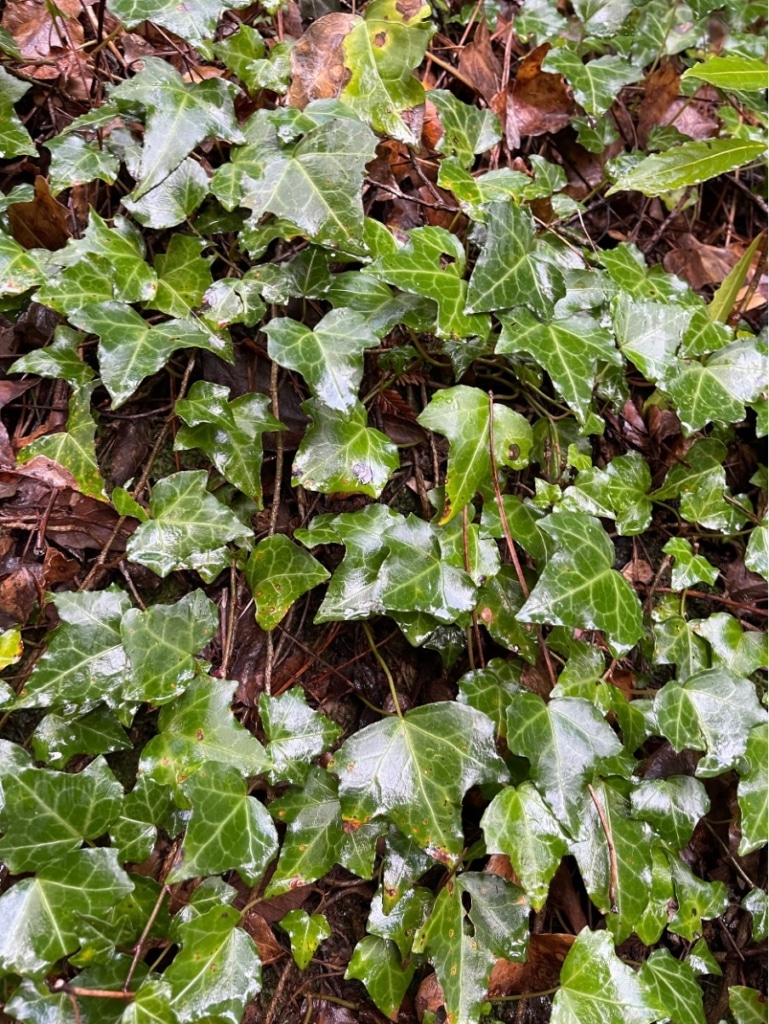
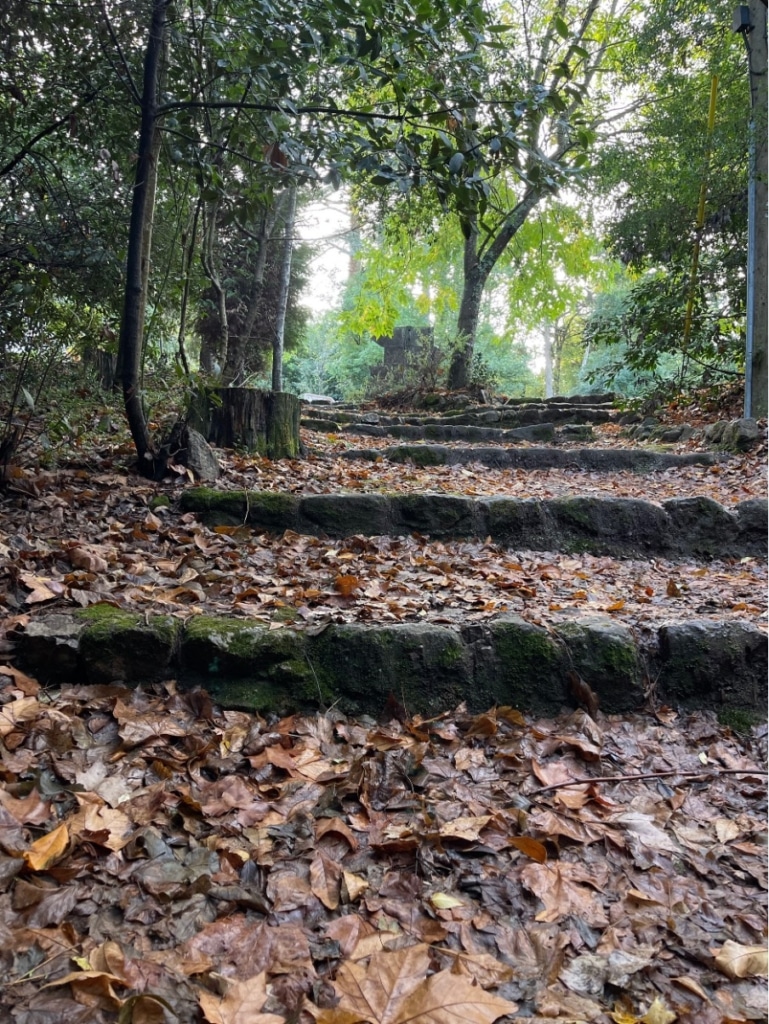
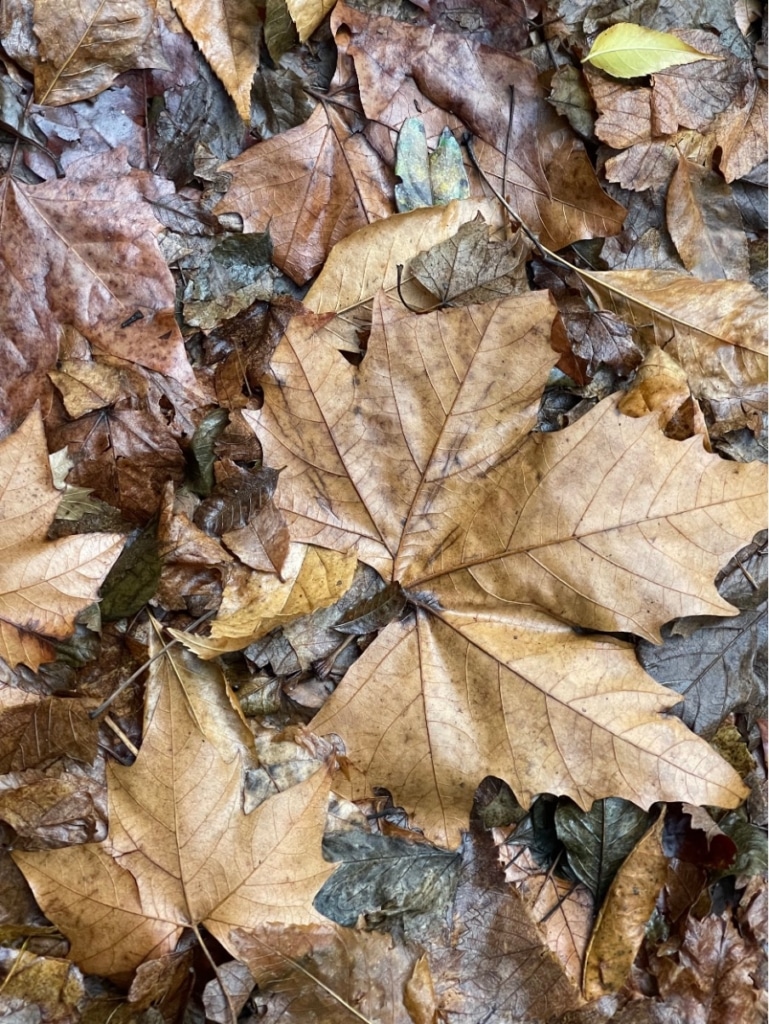
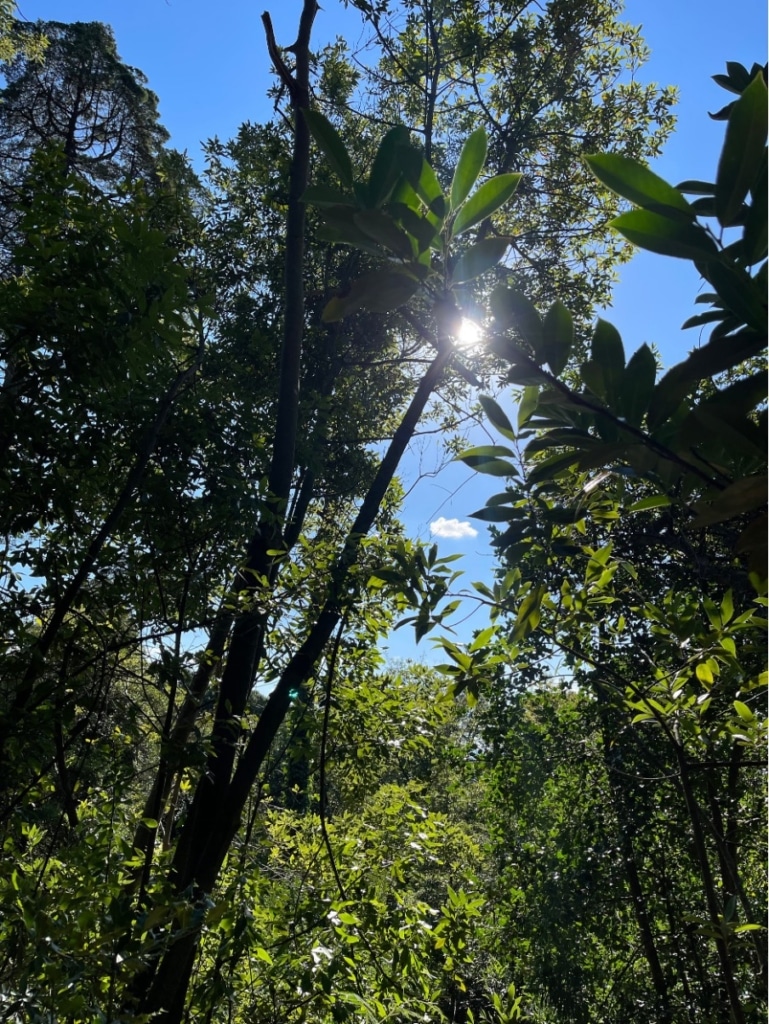
Our walk through the Mata do Bussaco begins on one of the many trails that weave through this magical forest. Beneath our feet, a colorful carpet of fallen leaves immediately captures our gaze: autumn transforms the foliage of deciduous trees such as chestnuts and Quercus robur, creating a unique chromatic mosaic born of complex ecological and biochemical processes.
The leaves change color through the degradation of chlorophyll and carotenoids and the production of anthocyanins: yellows and oranges derive from carotenoids, while reds come from anthocyanins, synthesized as a response to environmental stress. Browns result from tannin accumulation and cellular decomposition. The combination of these pigments varies depending on genetic, climatic, and nutritional factors, making every forest floor unique.
Beyond their aesthetic value, fallen leaves play essential roles in the ecosystem: they protect the soil from erosion, enrich it with nutrients, and provide shelter for insects and small animals. For us hikers, they also stimulate visual perception and psychological well-being.
A 2024 study involving 320 participants found that colorful autumn landscapes—even in virtual environments—had stronger therapeutic effects than scenes with bare trees, reducing stress and improving mood (Yin et al., 2024).
According to Jason Brunt, professor at Biola University, the visual contrast between red, orange, and yellow alongside vibrant green captures attention and stimulates the brain. Psychologist Michelle Harris of William James College notes that focusing on autumn leaves helps reduce stress and evokes positive childhood memories, promoting pleasant emotions even without conscious effort.
In addition to the autumn hues, the evergreen vegetation surrounding us—from plants like Phillyrea latifolia, Quercus suber, and numerous conifers—adds a sense of calm. Green, located at the center of the visible spectrum (around 555 nm), is soothing to the eyes, reduces tension and anger, and fosters peace and connection with nature. Our ability to distinguish shades of green, once essential for identifying edible plants and ripe fruit, remains a powerful visual cue that supports mental balance today.
Studies confirm long-term benefits as well: living near green spaces is linked to increased longevity and improved mental health, with lower mortality rates and greater overall well-being (Environmental Health Perspectives, 2016).
Observing the forest’s colors—from autumn carpets to evergreen canopies—is not just an aesthetic pleasure; it stimulates the brain, calms the mind, and strengthens our connection with this magnificent environment. Sight thus becomes the first sense through which the forest regenerates us, inviting us to slow down, notice details, and open ourselves to the world around us. And as our eyes adjust to this spectacle of colors, the next sense awakens—it’s time to listen to the forest and follow its sounds.
Hearing – The Calming Power of Forest Sounds
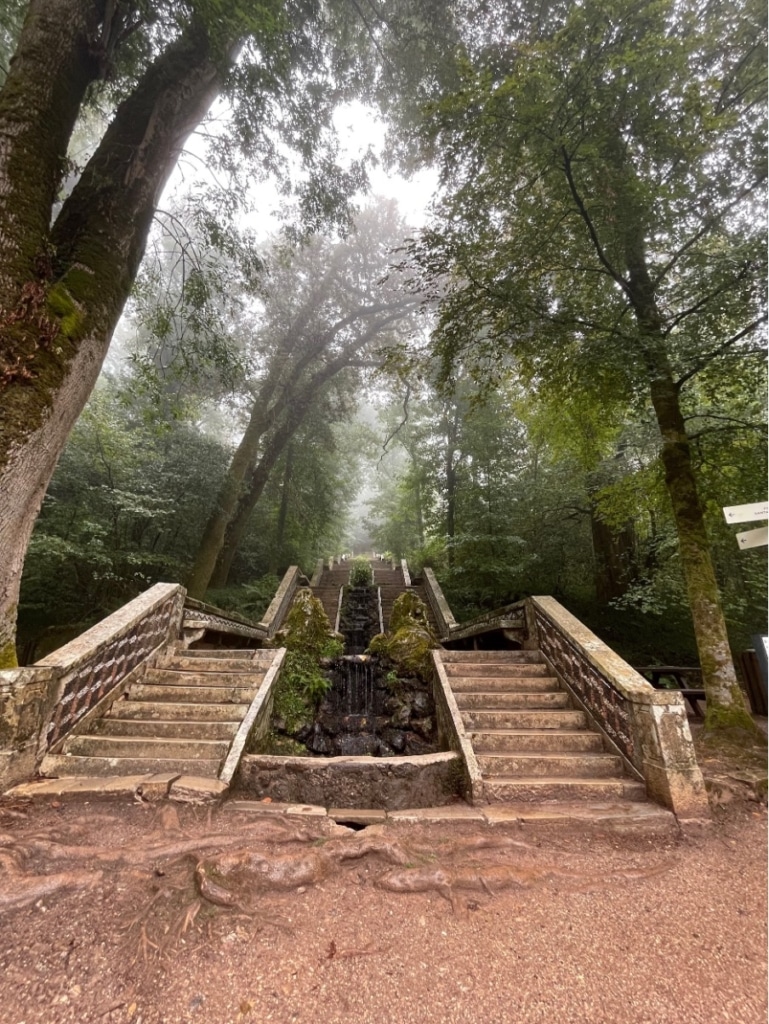
Our walk through the Mata do Bussaco is accompanied by a true natural symphony: the rustle of leaves stirred by the wind, birdsong, and the murmur of flowing water. We pause at the Fonte Fria, where two main water lines of the forest converge, forming a stream that crosses the Valley of Ferns—an ideal place to be enveloped by the sound of water.
The sound of running water has deep effects on the brain, functioning as a kind of natural white noise that induces relaxation, reduces stress, and improves mood. Studies suggest that listening to rivers, streams, or waterfalls stimulates brain waves, relaxes muscles, and contributes to a general sense of well-being. Marine biologist Wallace J. Nichols describes daily stress as the “red mind,” while the meditative state we experience near water—the “blue mind”—restores calm and mental clarity.
In addition to promoting relaxation, natural sounds enhance concentration. Research from the University of Sussex (2017) found that listening to natural sounds activates brain connectivity associated with outward attention, whereas urban noise promotes inward focus linked to anxiety and stress.
Physiological studies support these effects: experiments comparing forest and urban sounds revealed that natural sounds reduce heart rate, increase parasympathetic activity, and improve subjective comfort and relaxation (Jo et al., 2019). Participants reported more positive moods and lower stress, confirming that nature’s sounds have both physiological and psychological impacts.
The forest’s sounds embrace us like an invisible caress: the murmur of water, the rustling leaves, and the songs of birds not only soothe the mind but also enhance focus and evoke deep well-being. Hearing becomes a gateway to nature, a way to reconnect with the rhythm of life around us. And as we surrender to these restorative sounds, our sensory journey continues—it’s time to breathe in the forest’s fragrances.
Smell – Breathing the Benefits of the Forest
As we continue through the Mata do Bussaco, another sense comes alive: smell. The forest’s scents are among the most powerful stimuli for our well-being. Many plants release volatile organic compounds (VOCs), including terpenes, which diffuse through the air and create an “aerosol effect” that influences those who walk among the trees.
The benefits of terpenes and phytoncides—natural compounds emitted by trees to protect themselves from bacteria, fungi, and predators—are well documented: they enhance immune response, reduce inflammation, lower cortisol levels, promote relaxation, and improve sleep. Studies have shown that breathing forest air rich in these compounds increases NK cell activity, supports respiratory function, reduces psychophysiological stress, and promotes overall well-being.
Along the trails, we encounter conifers such as Cupressus lusitanica, firs, and pines releasing α-pinene, a terpene known to improve respiration, act as an antibacterial, and stimulate NK immune cells essential for fighting infection. Other terpenes, such as carene, enhance memory, cognitive function, and have anti-inflammatory effects.
Smell connects us directly to the life of the forest, making us feel part of an ecosystem that nourishes and protects us. As the fresh, resinous air fills our lungs, we move to the next sense—touch—which invites us to feel the forest’s textures and forms.
Touch – The Deep Connection with the Earth
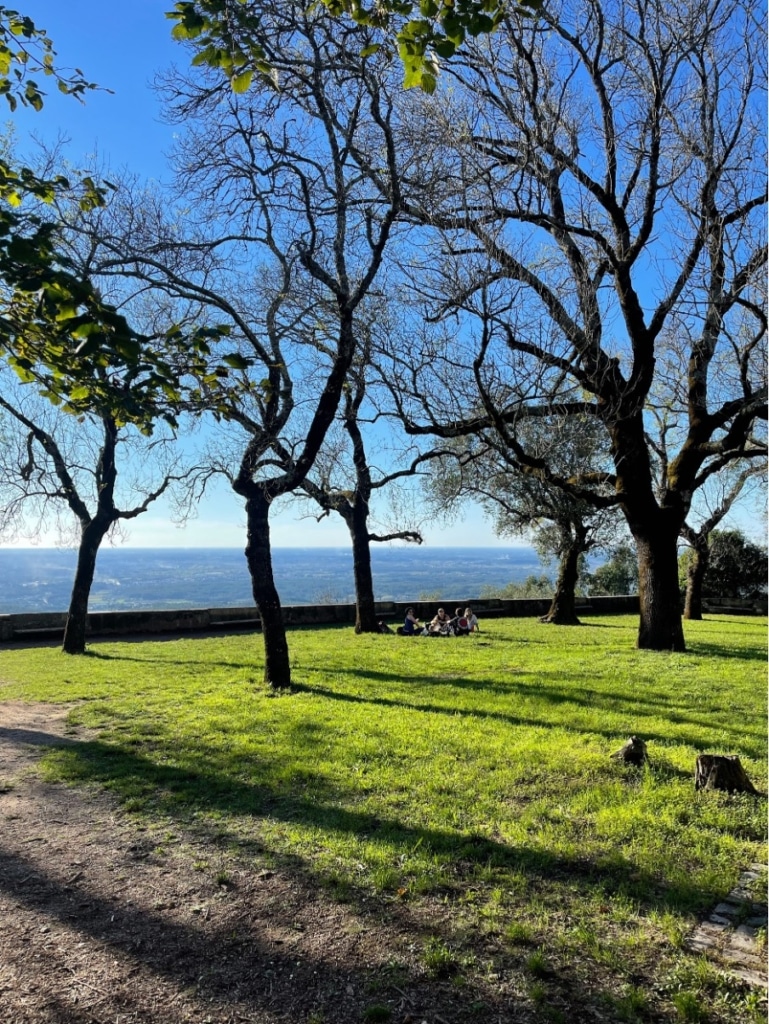
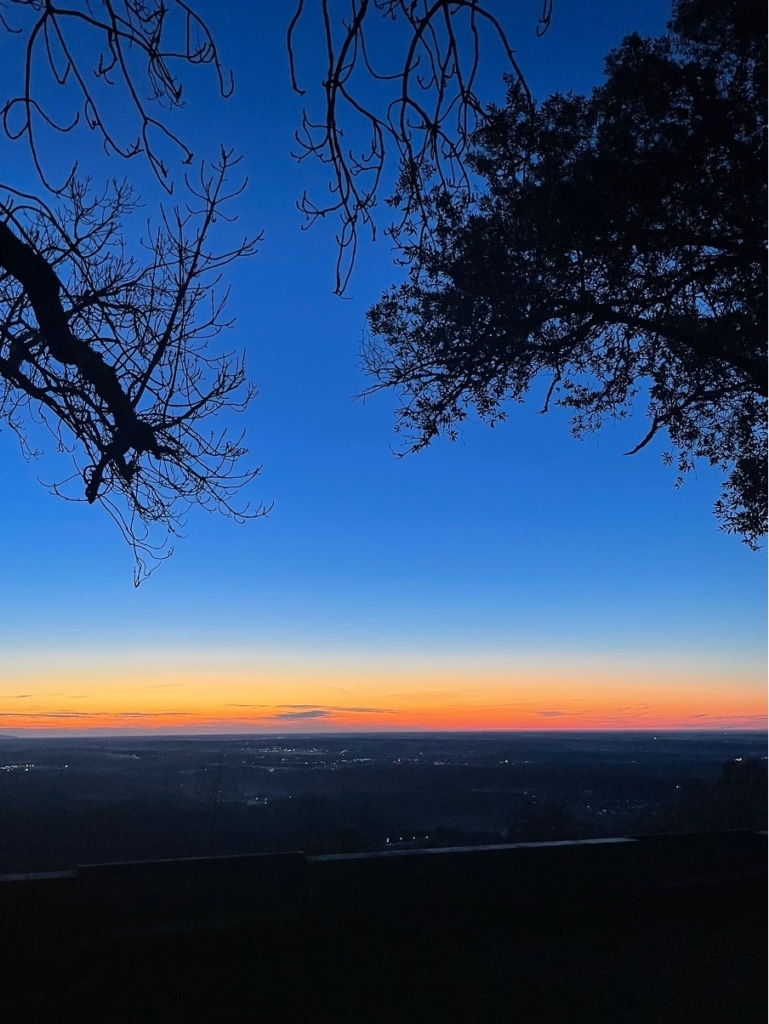
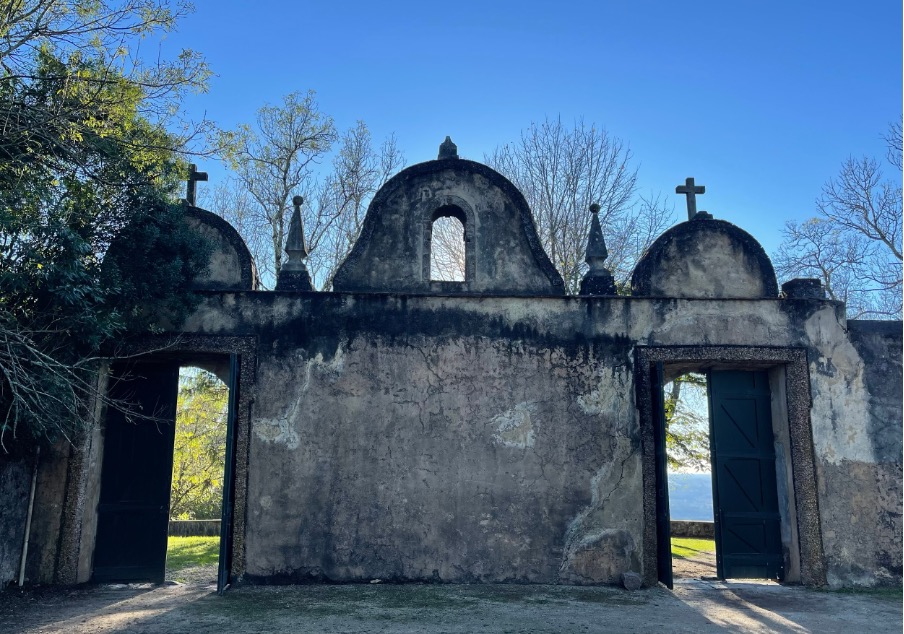
We continue our walk, taking in the colors, scents, and sounds of the forest, until we reach, at sunset, the Porta de Coimbra. Built in 1630, this was the main gate of the ancient forest wall, where a Carmelite gatekeeper once welcomed visitors. Restored in 1831 and again in 1866, it remains a timeless passage between past and present.
As the sky glows with gold and orange hues, we take off our shoes and walk on the soft grass facing the gate, letting our bare feet sink into the damp earth. The cool, gentle touch of the soil instantly grounds us—it’s as if the forest itself were embracing us, reminding us that we, too, belong here.
This simple gesture is known as grounding or earthing—the practice of walking or standing barefoot on natural surfaces such as grass, soil, sand, or rock. Far from being a mere sensory experience, grounding triggers physiological mechanisms with measurable health benefits. Modern lifestyles, dominated by rubber soles and artificial flooring, have deprived us of this ancient connection.
Scientific research on grounding suggests that direct contact with the Earth allows the transfer of free electrons from the ground into the body, helping to balance the body’s electrical potential. These electrons act as natural antioxidants, reducing inflammation and oxidative stress—processes linked to chronic pain, insomnia, and cardiovascular disease.
Walking barefoot also stimulates thousands of nerve endings in the feet, enhancing proprioception (awareness of body position) and promoting better posture. This sensory stimulation activates the parasympathetic nervous system, lowering cortisol levels and promoting deep relaxation.
Biomechanically, grounding strengthens stabilizing muscles, improves circulation and blood flow, and enhances mobility. Studies have also shown improvements in sleep quality and heart rate variability—markers of a balanced nervous system.
The main benefits of grounding include:
- Strengthened muscles and improved posture
- Regulation of the nervous system and stress reduction
- Improved sleep quality
- Anti-inflammatory and antioxidant effects
- Enhanced immune and circulatory function
Walking barefoot on grass, touching the rough bark of a tree, gently touch the soft, damp moss that covers the rocks and tree bark along the trail or immersing one’s hands in a stream are not just poetic gestures—they are therapeutic acts. Touch becomes a silent language that allows us to perceive the vitality of nature and restore contact with ourselves.
Returning to the Essentials
Our day of immersion in the Mata do Bussaco comes to an end beneath a sunset that bathes the canopy in gold, casting a timeless glow over the landscape. After hours spent observing, listening, breathing, and feeling the forest, body and mind seem synchronized with the natural rhythms of this extraordinary ecosystem.
The Mata do Bussaco, with its biodiversity and abundance of sensory stimuli, is a perfect example of how nature acts as a biological and psychological regulator. Every sensory experience— from the light filtering through the leaves to the scent of conifers accompanying the walk along the trail—contributes to restoring the equilibrium so often disrupted by modern life.
As silence deepens and the air fills with the scent of resin and damp earth, a profound sense of peace emerges—a reminder that well-being arises from continuous interaction between humans and nature. The Mata do Bussaco teaches us that caring for ourselves also means reconnecting with the natural world, where we can rediscover the same rhythms, laws, and harmony that govern our own biology.
The Mata do Bussaco awaits you to remind you that health, like life itself, begins in nature.
References
- https://www.centerofportugal.com/article/bussaco-healing-forest-cure-and-connection-with-nature
- Yin M., Li K., Xu Z., Jiao R., Yang W. (2024). Exploring the impact of autumn color and bare tree landscapes in virtual environments on human well-being and therapeutic effects across different sensory modalities. PLoS One, 19(4): e0301422.
- James J. et al. (2016). Exposure to Greenness and Mortality in a Nationwide Prospective Cohort Study of Women. Environmental Health Perspectives, 124(9), 1344–1352.
- Jo H., Song C., Ikei H., Enomoto S., Kobayashi H., Miyazaki Y. (2019). Physiological and Psychological Effects of Forest and Urban Sounds Using High-Resolution Sound Sources. Int J Environ Res Public Health, 16(15): 2649.
- Nichols, W. J. (2014). Blue Mind: The Surprising Science That Shows How Being Near, In, On, or Under Water Can Make You Happier. Little, Brown and Company.
- Chevalier, G., Sinatra, S. T., Oschman, J. L., Sokal, K., & Sokal, P. (2012). Earthing: health implications of reconnecting the human body to the Earth’s surface electrons. Journal of Environmental and Public Health, 2012, 291541.
- Chevalier, G., Sinatra, S. T., Oschman, J. L., & Delany, R. M. (2013). Earthing (grounding) the human body reduces blood viscosity—a major factor in cardiovascular disease. Journal of Alternative and Complementary Medicine, 19(2), 102–110.
- Oschman, J. L., Chevalier, G., & Brown, R. (2015). The effects of grounding (earthing) on inflammation, the immune response, wound healing, and chronic disease. Journal of Inflammation Research, 8, 83–96.
- Sokal, P., & Sokal, K. (2011). The neuromodulative role of earthing. Medical Hypotheses, 77(5), 824–826.”
Autoria: voluntária Elisa Bernardini