Artigo dos voluntários do Corpo Europeu de Solidariedade
Este mês partilhamos um artigo da autoria de um voluntário do projeto Corpo Europeu de Solidariedade – Volunteer Escapes. Os conteúdos partilhados resultaram do seu projeto de pesquisa de campo e bibliográfica, com o objetivo de fazer comunicação de ciência e divulgação dos trabalhos realizados aquando do seu voluntariado na Associação.
“Forests functions are closely related to the principle of recycling materials and nutrients. As such, they need a functional soil to evolve steadily, that is ensured by entire communities gathered into a soil biota, or edaphon.
Excluded from any direct sight, those rich communities shelter hidden gems of a soil biodiversity, in which springtails (or colêmbolos), are as fascinating as important for the balance of the biogeochemical processes (carbon, nitrogen, phosphorus cycles) created by this diversity.
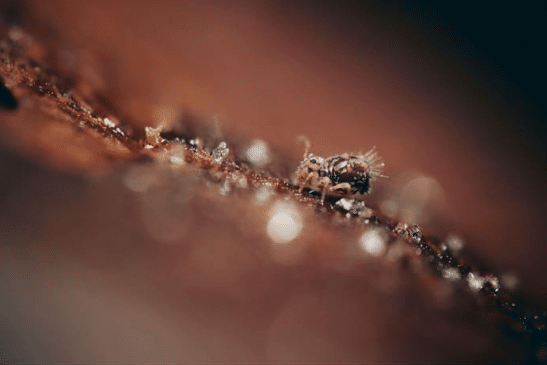
Existing since 400 million years ago (Grimaldi, 2010), those creatures are close cousins to the insects, sharing all of their features, excepting their mouth apparatus, and overall a unique organ called a furcula. That is the one responsible for their jumping signature used to avoid predators, as well as the name those arthropods inherited in English.
Most of them are omnivorous, taking advantage of the scattered resources to find in the top layer of the soil. Preferentially feeding on fungi, bacteria, and dead leaves, some families can even eat terrestrial algae or even be predators to similar-sized fauna.
They are also a key resource as prey for bigger arthropods : insects or arachnids (see below).
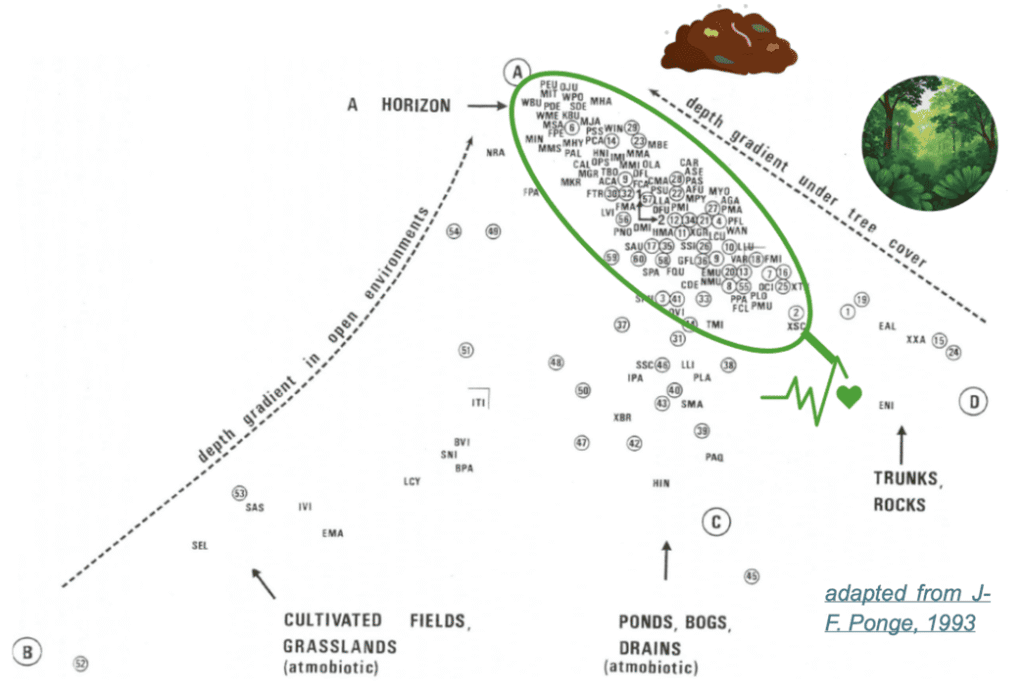
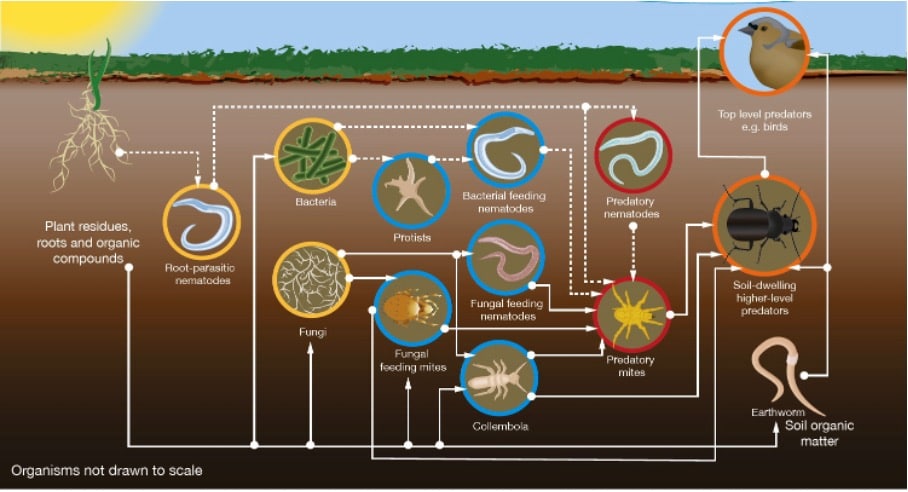
Springtails can be found in any existing terrestrial biotope, from ice sheets to the equator, whereas their thriving habitats lie in forests, where abundant litter coming from trees sets enough resources to allow greater coexistence of individuals, as long as species of this taxon in the soil, compared to grasslands or bogs (see below).
In this case/habitat, they share the status of main biotic regulators (with mites) due also to their population concentration. For example, conditions that fit perfectly to a given specie, could allow it to reach a population density around 15 000 individuals per square meter, from a minimum of 1000 individuals a same m² in the temperate climate of Europe (Marchal et al., 2026).
Due to that combined biomass, representing at the global scale around 32 % (Potapov et al., 2024) of the terrestrial arthropods (insects, crustaceans, arachnids, …), springtails act as both major decomposers releasing nutrients for microorganisms, and regulators of those same organisms, then avoiding a fast conversion of litter in CO2 (for instance) released in the atmosphere.
Their ubiquity, associated with their central position on soil biodiversity, set the tone on the storage of carbon, nitrogen, phosphorus… They also represent a steady amount of food for bigger organisms, on which, depend ultimately birds and reptiles.
Beloging to a “mesofauna”, they’re at the limit of the vision sharpness of a human eye. Some species are in that scope, and some stay invisible at the naked eye (their size varying from 0.1 mm to 2 cm). For a while, a microscope had been needed to see their details and study them. Then, now, specialized cameras can approach those tiny creatures. They now allow to take moments to dig into their world, with an insurance to discover a bright and colorful one, made of many orders :
The Entomobryomorpha, shares an elongated body shape with a clear separation between the thorax and the first abdominal segment. They have some of the longest antennae of all the springtails. They live mainly in woodland or topsoil.
The Poduromorpha are the “jelly fruits of the Collembola” (Annely Kuu). They have short stubby legs and a usually plump, often flattened body. They are characterized by a white color, a small or no number of eyes, a regressed or absent furca. They live in deeper soil layers and feed in the rhizosphere, where they played an important role in the matter cycle.
The Neelipleona contain the smallest species out of all the springtails. They are all cryptic, lacking pigments or eyes.
The Symphypleona are globular, with a distinctive, rounded body shape and usually long antennae. Often multi-colored, and nearly always with distinct(s) ocelli (insect eyes).
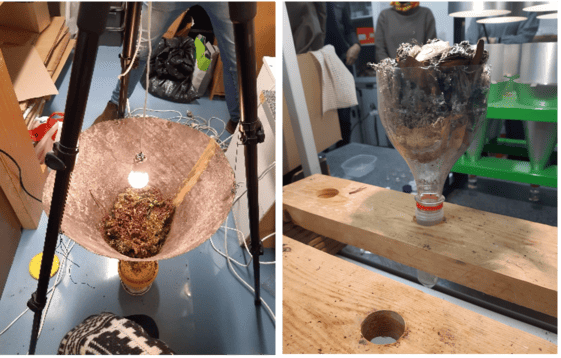
All of those colors fade away when these organisms need to be studied. Captured by a device called Berlese-Tullgren funnel (see to the right), the specimen conservation make unfortunately lose their pigment (Ruiz-Lupión et al., 2019).
One sample in a random point of litter should allow then to see 2 to 7 species in binocular microscope.
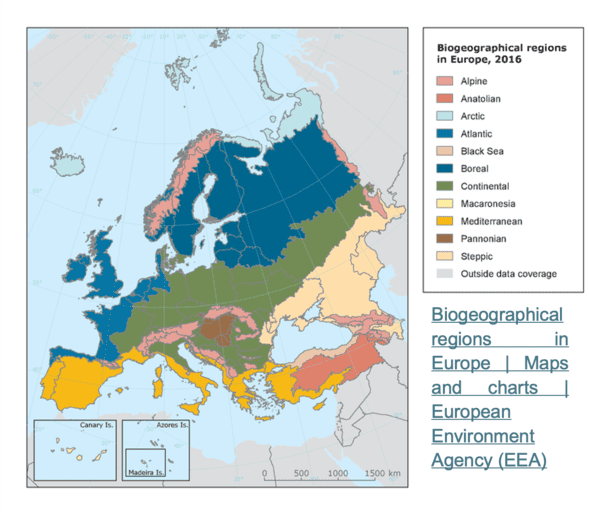
Viewed at the Iberic Peninsula scope, dominated by mediterranean biogeographical conditions, with atlantic influences, the springtails organized in the four previous orders, up to 700 species can be found (Jordana et al., 1990), which makes up an almost unknown diversity higher than birds, mammals, or many other classes of insects.
As well as the native forests of – for instance – oaks that favor their presence, springtails communities get weakened, at least by the emergence of eucalyptus stations (Barrocas et al., 1998).
Their influence in local biodiversity, and nutrient cycle boundaries, calls for a deeper scientific and common consideration that can be pursued in environmental state indicators, as it has been already initiated in the case of farmland areas (Cuartero Moñino et al., 2025).
Springtails make up an another branch of the fauna that is right under our boots to enlighten the natural dynamics in Europe, dedication is the only obstacle for them to get involved in conservation areas.”

Autoria: voluntário Matthis Da Costa